2008 in Negative: Intro and Index

At the end of every year come the lists. And each one brings trouble. In this series we look at several noteworthy annum-canons to get a handle on the year in film.

Quick Reactions to Movies

Limited to 140 characters each.

The Plastic Podcast

An audio program about movies. Listen with your iPod or computer.

Slumdog Millionaire and Ballast

On this edition of the Plastic Podcast, we talk with filmmakers Danny Boyle and Lance Hammer about their new films.

Other Recent Podcasts

Feeds

About

Daily Plastic is brought to you by the same people who brought you the wearable movie sling and that joke about aardvarks. If you know the whereabouts of the blue Pontiac Tempest that was towed from the Plastic Parking Lot on the evening of August 7th, 2008, or more importantly if you've recovered the red shoebox that was in its trunk, please contact us at your earliest convenience.

The © copyright of all content on Daily Plastic belongs to the respective authors.

“We push in line at the picture show / For cool air and a chance to see / A vision of ourselves portrayed as / Younger and braver and humble and free.” — Joe Henry, “Our Song”

Andrew Schwartz/Miramax Film Corp.
Meryl Streep and Philip Seymour Hoffman in Doubt

Doubt is one of those Oscar-bait movies that gets the Academy all worked up. Throw in two titanic actors (Meryl Streep and Philip Seymour Hoffman in this case), a hot-button issue, prestigious art direction, and Roger Deakins’s always assured cinematography, and you’ve got a film destined to make certain Top 10 lists. Not mine, though.

It stars Hoffman as Father Brendan Flynn, a friendly, progressive priest, and Streep as Sister Aloysius Beauvier, the kind of nun who terrorized parochial students in the ‘50s and ‘60s. Sister Beauvier doesn’t much like Father Flynn, and that dislike turns ugly when a younger nun (played by wide-eyed Amy Adams) suspects Flynn of making untoward advances on a young boy.

I can understand why Meryl Streep has received so much acclaim (she knows how to chew her scenery without over-stuffing her mouth), but I could never get past the fact that I was watching Meryl Streep. Hoffman, on the other hand, gets just as many dynamic moments and yet effortless slips into his character. His Oscar nomination will be richly deserved.

Effortless slipping is not how I’d describe director John Patrick Shanley, who wrote and directed the original play. Plain old slipping would be more like it. On more than one occasion, he punctuates critical moments with lightning and thunderclaps, a cliche that even horror maven Clive Barker would find hoary. At another time, we have a scene where a cat catches a mouse. Ah, metaphor — I learned about that in junior high. And while cantic camera angles might work in The Third Man, which is all about style, they’re as out of place in this naturalistic setting as a pedophile at Chuck E. Cheese. Ok, that’s not such a good analogy.

The writing is also unnecessarily direct. An early homily by Father Flynn starts with the not-so-subtle, “What do you do when you’re not sure?” Hmm, I wonder what this movie’s about? For those who’ve never taken a philosophy or religion class, this might be provocative stuff, but the theme never rises above the superficial.

I do give the film credit for at least keeping the audience in doubt. Is Father Brendan Flynn a compassionate priest looking out for an outcast student, or is there something much more sinister at work? At various times, the movie has us leaning in one direction only to push us in the other. And because the movie is set in 1964 and we know what would happen in too many Catholic parishes over the next 30 years, we have great sympathy for Sister Beauvier’s passion for ferreting out the truth. Even if our natural inclination is to see her unwavering certainty as a self-righteous flaw, we know that the opposite response of looking the other way led, in real life, to too many shattered lives.

Still, it’s not that hard to keep an audience suspended between two poles. What’s much more difficult is to provide a satisfying ending to such an exercise. In that, Doubt utterly fails. It feels like we’re missing a couple scenes. How else to explain one character’s sudden, unexpected, and completely unexplained burst of emotion? And with that character weeping for her Oscar moment, the camera pulled back and up — yet another film cliche — and I silently swore that I had no doubt how I felt about this film.

This is the first in our series looking at various best-films-of-2008 lists that are appearing as we reach the holidays. series introduction and index

Roger Ebert. He's a film critic of the people and a fan of good movies. He watches a lot of them, and he writes with enviable energy. He's also firmly in touch with the mainstream even as he keeps a toe or two invested in more adventurous films. So his list seems like a fine place to begin.

This year, instead of ranking ten films sequentially he chose to identify twenty features, five documentaries, and one special jury prize, sorting each group alphabetically. Another reason his list is a good place to start is that I've seen all of these films. First, take a look at his list and read his remarks.

He chose the following features (listed alphabetically):

Continue Reading

Every year, the lists. Lists lists lists.

And with each one comes trouble. For example, do we include films that we saw this year or films that were released this year? And how do you define "released?" Rules rules rules.

But more interesting than legalities are the inevitable philosophical problems. For instance, if my list omits a film that many other respected film watchers and blabbermouths have included on their best-of lists, does that mean I didn't like it or didn't see it?

I could answer that question in the accompanying remarks, but even an informative didn't-see-it seems to reinforce the year-end canon, a brick in the wall that keeps out the little movies that few people saw. Bricks. Walls. Slippery slides into oblivion. Make your own metaphor.

There's no solution, of course, but let's see if we can think of a new way to examine the field. Daily Plastic wasn't around last year, but with any luck this will become our tradition: we're going to dig into a number of year-end lists that we find interesting, one by one, day by day, and we'll examine not what they've left out (which will be covered implicitly by our own year-end lists) but by what they've included.

It's "2008 in Negative," not negative as an attitude but negative as a bas-relief.

At the end of the series we'll reveal our own favorites of 2008. I like to eject mine from the movie Jeep as the ball drops on New Year's Eve; my Plastic colleague J. Robert Parks prefers to mull the options well into January. Until then, we'll look at the early birds, the canaries in the mine.

And finally, our own lists:

  • You may have heard that instead of moving on to other things, Jay Leno is staying on at NBC even after they give The Tonight Show to Conan O'Brien. Why? Because they're giving him an hour of prime time every day to continue a show very much like the one he's doing now. I can't imagine this is the future that O'Brien envisioned; see Conan's non-comment.
  • Did you hear about the stage actor in Austria who thought he was sticking himself with a prop knife when actually it was a real one? "He collapsed on stage with blood pouring from his neck and the audience started to applaud the spectacular special effects," says The Telegraph.
  • Sorry, that's not our sort of thing. We're all about movies and such.
  • Oh, who cares. Here's Stephen Fry in five parts:

Continues in parts 2, 3, 4, and 5

You know what would be great? To take Hitler down? And stop the gassing and the conquest and the thing and the guy? Would be an audacious hotshot with the guts to get in there and do it. A guy so good he could do it with one eye tied behind his back. A guy so good he counts his blown-off right-hand as an asset because he can "Heil Hitler" ironically and you can never really call him on it. And I know just the actor to play him.

Stauffenberg hatching his plan.
Stauffenberg selling his plan to Nazis who are starting to question this Third Reich thing, circa 1944.
Stauffenberg psyching himself up for the dangerous mission.
Stauffenberg expressing self-doubt. (deleted scene)
Stauffenberg expressing absolute confidence in the mission and himself.
Stauffenberg upon being told that his paperwork must be signed by the Führer.
Stauffenberg insisting that he blew Hitler up but only after the paperwork was signed.
Stauffenberg, God bless him, expressing outrage that Op Valk was not engaged as planned, wasting the three precious hours that he'd previously gained through ingenuity.
Stauffenberg taking even more charge than he'd taken previously. Must he do everything single-handedly? Time to school these chumps; the only problem is that he lacks a pupil.
Stauffenberg running the German government with an eye toward Berlin.
'Do you think he has a sense of humor?' 'I think his optometrist has a sense of humor.'
Stauffenberg inquiring after the safety of his wife, Frau Stauffenberg.
Stauffenberg coming to the conclusion that Hitler was not blown up and wondering if the mistake was due to faulty depth perception on the part of one of his peers.
Stauffenberg about to be executed but only after naming a name to clarify that the failure was not his but that of Shiva the God of the Wrong Person's Death.
Stauffenberg as remembered by the footnotes of history, steely.

Valkyrie is based on a true story, which I know because the screen says so at the beginning of the film in German. And I know that it says so at the beginning of the film in German because the letters morph into English before they go away. Then we hear the hotshot writing his diary in German, which eventually morphs (audibly) into the English words of Tom Cruise who seems almost frustrated by the cumbersome translation process, as if the hotshot can't be bothered to continue in German when something more serious is at stake. Also: we hear what he writes. Linguistic efficiencies could and will be made.

And the movie's off. A sequence in the middle of the film involves putting a bomb at the Führer's feet, and I quite liked the suspense, even though throughout that stretch I was thinking, "I wish Eddie Izzard were taking down the Führer instead of nervously making a phone call in the background." That's what's nice about this movie. It gives you time to think about what you're seeing. Like: Is Tom Wilkinson speaking only his dependent clauses with a British accent? Is that Peter Cushing back there? And, say, who do you think would win in a peaked-cap face-off between Grand Moff Tarkin, General Zod, and let's say Hitler? That kind of thing.

Then more morphing, this time in the face of the sometimes eye-patched, sometimes digitally walleyed Tom Cruise. It's his steely performance, his 1,000 faces that carry the film, each one revealing a facet of Hotshot Claus von Stauffenberg, each of them determined, each of them steely. If it weren't for that Germano-English text up front, I'd think this guy could probably pull it off. Ice the Führer, engage Operation Valkyrie to gain control of Berlin, gain control of Germany, gain control of Europe, and finally install Field Marshall Goose just in time to put the egg back on the mantel before the Allies arrive to say, "Yo, what the?"

Alas, he had no strafing partner, this hotshot. The rest is footnoted history and symphonic strings.

His wife lived and raised their kids without incident. Did I mention his wife? No matter.

Summit Entertainment

Bella is the new girl in town, and Twilight waits a full hour before revealing to her what the rest of us knew from the moment he strode pale-faced into the school cafeteria: the quiet, glowering boy in her grade is a vampire. It's the skin, it's the brooding look, it's the magnificently gelled hair, it's the slo-mo entrance. Dead giveaways. He doesn't talk to anybody, ever, but, alas, he locks into Bella's gaze, and she smolders for the rest of the film, usually in tight shots that alternate with close-ups of his burning unrest.

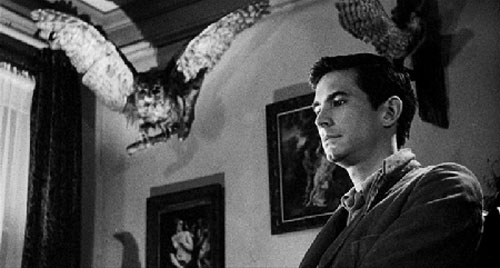
Director Catherine Hardwicke (Thirteen, Lords of Dogtown) sees the humor in the portrayal, and her whiffs of wit carry a long, slow setup. When the vampire, Edward, is seated in biology class — still brooding, ever brooding — Hardwicke positions a stuffed bird on the shelf behind him, spreading its wings so they seem to be attached to the scruff of his neck. In Magnolia, P.T. Anderson used a caduceus painted on a back wall to make the sad boy genius in the foreground even more angelic, even more Falconetti-esque, and in Twilight Hardwicke evokes genuine, giddy laughter with the shots of first one wing, then two, the pair growing in prominence as Edward senses Bella's approach through the bio-science doorway.

It's a dangerous thing to confuse children with angels.

But Edward is not, in fact, happy to see her. He holds his head low like the reluctant angel in Wim Wenders' Wings of Desire. This blue-lipped, aggressively plucked boy is not a reluctant angel, of course, but a reluctant vampire smitten by the girl who should be his prey.

Therein lies his conflict, and therein lies hers, and from the two a familiar story emerges: love at first sight needs no justification; opposites attract; beautiful people attract; dangerous boys attract bold girls who, in time, will benefit from the protection provided by their speed, strength, mystique, and wisdom (or, here, telepathy). Protection from what? It matters not; girls need protecting. From reckless drivers. Rival vampires. What have you.

But — here's the rub — if the boy loses control of himself in the heat of passion he could destroy her. She has an intoxicating scent. She's filled with blood-red deliciousness. Perhaps he would not retract his teeth were they ever to take hold. It's the story of a thousand romances, of two thousand movie teens who struggle against chastity, and it's a story not altogether different from that of poor Peter Parker who cannot declare his love for whatshername because certain ne'er-do-wells would then use her as Spider-Man bait. In short, nothing attracts boys like somebody else's letter jacket. But in this case, the ne'er-do-well is Edward himself. Stuff that duality into your Spidey tights, Peter.

Continue Reading

It's quick summary week in the Elsewhere department:

Ishika Mohan / Fox Searchlight / Lol Crawley
Left: Danny Boyle in India. Right: JimMyron Ross and Tarra Riggs in Ballast.

On this edition of the Plastic Podcast, Robert Davis first talks with Danny Boyle about his new film, Slumdog Millionaire. Among other things, they chat about what drew him to the project, his impression of India, working with his co-director Loveleen Tandan, his strategy for editing multiple timelines, and the film's surprising depiction of torture — over a game show.

Then Rob talks with Lance Hammer whose debut film, Ballast, is moving gradually around the country. They talk about the music he almost added, the eye of an art director, the impact of Godard and the Dardenne brothers on the film, the way he gleaned dialogue from his extensive, "architectural" process of rehearsal and improvisation, and the tone of the Mississippi delta.

0:00 Intro
3:09 Interview: Danny Boyle on Slumdog Millionaire
17:24 Interview: Lance Hammer on Ballast
33:43 Outro

Listen Now or Subscribe in iTunes (free)
Duration: 34:34

Further Reading and Listening

Update: 15 December 2008
Excerpts from the interview with Lance Hammer appear at pastemagazine.com.

Colin Powell Reacts to Obama Victory:

More video clips:

Update:

Listen, people. Can't Wellington the Wiggly Worm and Booker T. Bluebird live together in peace?

Later PostsEarlier Posts