Three years ago I interviewed Arnaud Desplechin about his new film, A Christmas Tale, for Paste Magazine. As grateful as I was to have an outlet that would let me write about such things, the talk itself wouldn't fit neatly into however many words I was given. It's a cinephile's film, packed with cinematic references, strange reverberations, and loose threads, and since Desplechin seemed willing to talk about every facet of the film, the interview, too, was herky-jerky and wildly allusive. But I kept having ah ha moments as we talked, the way you do when you unpack a dense-enough work, and I've long meant to share these tidbits.
So a transcript follows. I'm sorry it's so late.
Let me set the scene: We were in the last half of the annual Toronto International Film Festival, just past the point of exhaustion. Desplechin spoke a clear, somewhat manic, often skittering English. We turned only occasionally to the translator. And even in the media-rich environment of a film festival, where movie writers pack in four, five, sometimes more films every day, I found Desplechin's love of the medium both rare and energizing. Though we explored the film's ideas only lightly, the way he described his playful approach to its many fragments sent me sailing through the final days of the fest.
I've flattened his voice into text, but I hope you get something similar.
Robert Davis: When you see a bunch of films in a festival, in a short period of time, you start connecting them in your head and seeing common themes. And in this festival I've seen a lot of family dramas and family reunions. But yours is very different. There's more-- there's more energy and more acid, I think.
Arnaud Desplechin: [laughs]
RD: Could you tell me what your original idea was for the film?
AD: What you said, you know, more energy, more-- Just to be brutal. Really, it's coming from films, you know? Yes, I had the governing lines of the plot, but empty lines, which means I didn't know anything about the marrow transplant or-- Just the movement of it, the idea. OK, this amount of characters, they will be gathered in that house, in a large house. The title, the idea.
Do you have in Canada or the US these sort of houses during Christmas? We call them "les calendrier de l'avent". And, you know, each day of the month before Christmas you open a little window?
RD: Yeah.
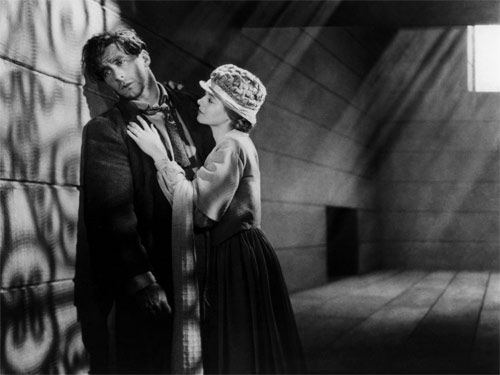
AD: And you have a small gift, which is not a gift it is just glowing, you know. And so the kids open 21, 22, 23, 24, Baby Jesus. So that kind of shape, with scenes like little rooms. Plus in the set, little rooms for each character. So I had this shape in mind, plus I saw -- I guess I saw it when I was a kid but I didn't get it -- but when I saw Only Angels Have Wings by Howard Hawks, those characters were so brash, you know. And I thought it was so modern, and I thought, OK, let's think about the last films I saw this year. They are much more cowardly than the Howard Hawks movie, which was made in the 1930s! And the speed of it [snaps his fingers: snap snap snap]. And that speed in the movie-making was driven by the speed of the characters themselves. You know what I mean? In this Howard Hawks movie the guys are all aviators?
RD: Yes!
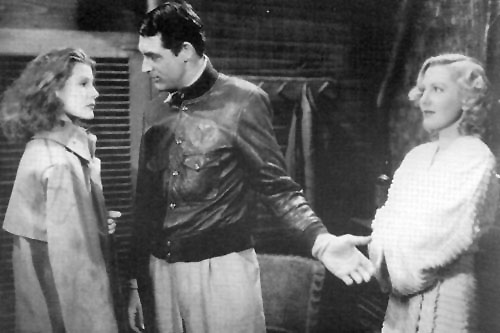
AD: Yeah, yeah, so they're risking their lives each day. I mean really risking-- I mean the opening is amazing. You have a main character. He's with a girl. Oh, i would love to spend some time with you. Let's try, let's go in a restaurant. OK, I'll take a plane. Boom, the guy's dead. You know, feels like ten minutes of movie! It's just so-- you understand that they don't have time to lose. So they go straight to the point at the opening of each scene, which gives this pace, you know, that is so speedy, because the characters are all experiencing an emergency situation.
So I was trying to find the emergency, and it became cancer, which is the big risk, and this idea of the transplant, you know, which is this idea of the danger, the threat, that forces all those characters to be that brash and impolite.
RD: I remember in Only Angels Have Wings, the way Cary Grant would grab the arm of-- who's the actress? uhh--
AD: Two actresses. It's wonderful in a film to have two love stories between the male and two actresses. There's the blonde girl and his former, ex wife or--
RD: Yeah, that's right, that's right. He would grab their arms and rush them off to some room, and it always seemed so harsh the way he would take hold of them.
AD: Yeah. By the way, I want to sleep with you. [motions as if dragging someone away] No, you say, you can't do that in films. Yes, but I don't have the time because I'm an aviator. Wow! It's so brutal, you know. So I thought it would be nice to have a family of big mouths like that, acting that way.
RD: What was your concept behind the music in the film?
AD: Several ones. When I finish a film, when I start editing, as soon as I don't understand a scene, meaning I can't figure out where the most intense moment is, what's the best shot, what it's about-- When I encounter a situation, I remove the sound. I just put some music, any kind of music, something that I happen to be listening to at the moment, and I edit like that visually, just like a silent film, with just the music.
And after that I put the sound back, and the dialogue always sounds right. I mean it's never pointless. If you have question-and-answer it always works. Because if the acting is good, it's good. It doesn't need sound for that. So, the music is the tool that helps me to understand what I did during the shooting, you know?
I will just take one very simple example. At the very opening you can see Junon. She's alone. It's quiet because now she's old and retired, it's in the provinces, small city. And she's fixing the tea for her husband. So it's cool and nice. And I [was listening to, editing to] some beautiful ragas, but I said why am I doing it, why does it work? I start to ask myself this question, why does it work? Which drove me to the answer, you know which is Jean Renoir's The River, you know? It's a film about family, it's a quotation of The River, Jean Renoir's movie, because it's about death, failure, stuff like that. But you have to express it in a sweet way, so those ragas were perfect. Each time you could see Junon, she was The River, she was Jean Renoir's movie, which is a movie about a family gathering in a house, you know? So it just matched. It permits me to understand what I shot, you know?
But before that, I knew for sure I would use the Mendelssohn score because here and there, there were some quotations of Midsummer Night's Dream, so I thought the Mendelssohn music would be appropriate for the firecrackers, you know?
And after each time it's something like that.
RD: And another movie that sort of hovers musically is Vertigo.
AD: Yeah, yeah, yeah, yeah, this one I knew I would have to quote that sound, you know, because Henri's character is about-- He's a widower, he's the eternal widower. He had this wife, the Italian one, she just died, two weeks after [they were married]. And his mother will die, you know?
And then the mother is in this museum, and the name of the character is Madeleine. So it's about women and loneliness and the fact that when you love a woman it means that you always loved another one before. So it's quite deceptive, but it's nice. Let's be practical, because it does happen. [laughs] And so this feeling, yeah, the Vertigo, yeah, it just -- you see what I mean, so it sort of. Yeah.
RD: And the Charles Mingus song that's in the movie is "Reincarnation of a--"
AD: ... of a bird, yeah.
RD: "of a Lovebird." It all fits.
AD: Yeah. I think it was appropriate for the scene. [laughs] So each time it's a way to try to dig the meaning of the scene, you know. Plus the character who had this letter, which is so violent, so brutal, and when Henri is writing to his sister, the lines are really brutal, and when we discussed that on the set with Mathieu, we knew that we wouldn't be brutal, that in a way it was much more interesting to act it like a sort of regret, you know, to say--
And plus to focus on the very last lines, "little sister," the fact that he's sorry for his sister, you broke up your toys, you know, I'm really sorry, you want to fix them.
So to be full of love instead of full of anger, you know. And so I thought Elizabeth would have such a bad time during the movie, then to offer her a lullaby would be nice. So I tried the lullaby by Gerswhin, you know, and I knew this wonderful French jazz player [Armel Dupas], you know, and so we used the [quateure?]
And he added some improvs on the lullaby.
So, not to be mean to Elizabeth's character, that was it. It was a way to take care of her and her son. So it's always things like that.
RD: The way Mathieu speaks the letter to the camera seems theatrical enough that I wondered at first if it were real. I mean we see the letter, but later he says, since when do I write letters?
AD: [laughs]
RD: as if-- I wondered, for a minute, did he really write this letter?
AD: Just after that he adds a little, "Oh yeah, I wrote to her--" Actually the letter does matter a lot in the movie, but for the character, "Oh yeah, I just wrote it--"
RD: He barely remembered.
AD: That's it. But for him-- It's such a big deal in the opening, but the guy he just didn't realize how violent he is, you know, because the letter was quite violent. Yeah yeah, come on I wrote a letter. It's strange.
RD: I wonder, too, if he got some of that from his mother, who also has very harsh things to say, to him especially, about how her body is going to reject-- She doesn't want his bone marrow.
AD: Yeah, or the opposite when she says -- I love this line -- "Henri came from my womb, so I'm taking back what belongs to me." Wow, she's speaking like Schwarzeneggar, you know? And it's funny because they are so sure they hate each other and that they don't match each other, but they look alike, Junon and her son.
RD: And even the final scene, their final exchange at the end in the hospital, it almost seems tender. Even though the words are harsh, just the fact that they're together seemed a little bit tender.
AD: Yeah yeah yeah.
RD: Abel, the father, is a really lovable character in the film, and I know you made a movie previously about your father and about a house, and I haven't had a chance to see that yet, unfortunately, but I wonder if any of your own father is in the Abel character?
AD: I'm sure he would love it, he would be proud. [laughs] No, it's a different kind of character. And, yes, I'm a good son, I do love my father. [laughs] It's quite different, quite different. It sounds more like, uh-- [pause] Perhaps, does it sound more like my grandfather, the father of my father? Yeah, there are a few things, the fact that-- perhaps it's just because my father was like les pères qui maternent [mothering fathers], you know, that kind of character?
RD: Yeah. So in addition to Madeleine, there is another character we never see, but who is sort of a ghost in the story, and that's Henri's brother.
AD: Joseph.
RD: That's right, Joseph, the child who died. And there's also this wolf in the basement. I like how there are things just outside of the frame, things the characters are all aware of--
AD: Yeah.
RD: and that still affect their lives, even though they're long gone.
I was going to mention one other thing about Vertigo, which is-- I know your film is going to be in San Francisco's French series in October. Have you been to San Francisco?
AD: Yeah once-- er twice.
RD: If you haven't already you should go see the Vertigo sites. You can see all these different locations that are in Vertigo.
AD: I had the chance to do some jogging, you know, so each time I have been -- actually I've been three times out there, and my jogging is along the piers, up to Vertigo's bridge [aka the Golden Gate Bridge], and if you make a little loop, you can go in front of this place where the old arch, where you have this famous wide shot where-- you know-- Yeah! Plus, I was staying at the hotel just in front of Madeleine's place.
RD: Oh, cool.
AD: Yeah, just in front of the corner where he's parked and waiting for the first time, the first time that he's following her. I was staying in the hotel just beside. And I could see the place. It's amazing. But I couldn't stop thinking of Harry Callahan, too. Dirty Harry.
RD: Oh yeah, yeah.
AD: So sometimes I was seeing Dirty Harry and sometimes here it was Vertigo. It's quite a cinematic city.
RD: There's a moment in Vertigo when they're walking in the Muir Woods, and there's nothing special going on, but because the music is really eerie, it gives it this sort of ghostlike quality. And in your film, A Christmas Tale, there are many scenes, like when the two women are shopping, when the music is very tense, like something is about to happen, something sinister, but it isn't necessarily a sinister situation. I like how the music can provide a counterpoint in that way.
AD: Yeah, it's funny because it's a scene where the two women are quite-- I guess they try to impress the other one. OK, you're gutsy, I will be-- I will show you, I'm gutsy. I will show you how gutsy I am. You know, they are-- You're a bitch, I'm a bitch. Come on. Look. There's something like that between the two girls. You're funny. I can be funnier. You know, there is something like that.
Plus there is a real friendship between them which just happens. Why are we friends? It is just there in the middle of them, but Junon escaped. She escaped because she doesn't want the marrow transplant any longer, you know, she doesn't want to risk anything, she's bored with sickness, she's bored with the fact that she will die, she's bored with the fact that she's getting old, you know. OK, next year I will have this leukemia, and it's the last dress I'm buying. I won't be a woman any longer, I'll just be a pitiful human being, you know, shitting in my bed in the hospital. I won't be light and-- you know.
So there something, there is a sort of emergency pace in it, which is: it's the last time I'm doing it. Because I'm getting too old, it's the last time that I can pretend that I'm light and free, so that's why I thought the music was not to cheat with the scene but was revealing a facet of the scene which is relevant.
RD: One of the few things the family does together, is-- they stop for a minute to watch Cecil B. Demille's The Ten Commandments.
AD: [laughs]
RD: Why do you think it's important that they watch that movie and that scene? It's the parting of the Red Sea.
AD: If I was telling you the truth you would be horrified. I'm not sure that I'm allowed to say it, because it would sound so pompous and intellectual and like an obscure joke that I'm doing just with myself. I don't want to impose that [on] anyone in the audience.
First, I know for sure that-- I'm allowed-- I feel that I'm allowed to say it because I was raised as a good Catholic boy, you know, [the] Jesus character on screen is boring to me. I'm not saying for the other spectators, but to me he's boring because he will lose, you know. And I always thought that Moses was a better character on screen.
RD: [laughs]
AD: It's just like that, you know? When I was ten years old, I thought all the films with Jesus-- I know Passolini's film is so great-- but [in other films] to me it was a weak character. I was not that interested. Plus I couldn't relate because the guy is always saying that he's the son of God. OK, fine, so, I'm not the son of God, I'm just a human, so it was difficult for me to relate to a character so powerful, so it was quite difficult, so-- yes, I love the Biblical movies.
Yeah, but I remember because it doesn't shock anyone in France. OK, slightly, but people do not notice. But when you're in America -- perhaps not in Mexico but in Canada or in the US -- people notice it. I remember when I sent a list of movies that the family Vuillard would look at on TV, I had this very close friend of mine, an American, who said to me you can't put The Ten Commandments because it's an Easter movie, it's not a Christmas movie. It's an Easter movie. Specifically that scene. It's an Easter film. You know, [he said] we release it on American TV but just during Easter. But in Europe it's not the same--
So after that I start to think about it, and now I know why that scene. but I don't feel-- [pauses]
It's about circumcision, if you want me to be honest.
You know, that's what it means, the separation of water in the Talmudic way. You know, what does it mean when Moses crosses that sea and the sea is split? It's a metaphor for the circumcision that God will propose to the Hebrew people as an alliance between the eternal and the Hebrew people, you know, it's a pre-vision of the law that he will give in the Sinai.
So that's what the film is about, because you know Henri will go into the hospital on the first of January, and for a Catholic, first of January is the circumcision of the Christ, you know, so it's a sort of stupid game I play like this around meanings, you know? [laughs]
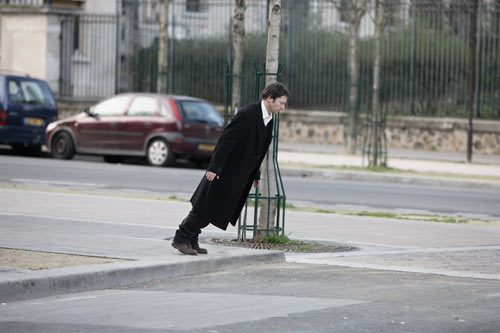
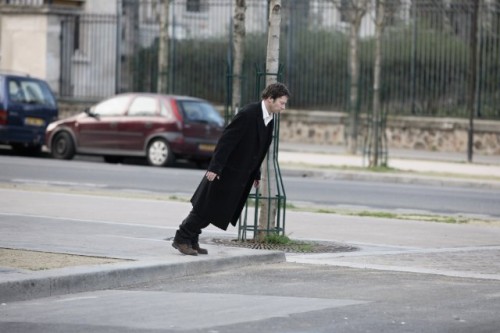
Plus, I knew I had this image this tracking shot of Henri walking toward the window, and doing this absurd exploit. I'm going through the window. it's so absurd. Instead of taking the staircase, you know, I'm going [down] the wall. Big deal, you know? And he feels like Moses, he's opening new lands, new promises. [mocking] What kind of a promise? Just take the staircase!
But he is doing something heroic for his people, which is to go through the window, and so you know there was something pathetic. And yet nice. I don't know. I don't know. So all these motifs.
RD: There's also something kind of abstract about the idea of the splitting of the sea and the way the-- the way the sea divides the land. There are lots of divisions in the movie [A Christmas Tale] between people and between eras and--
AD: Yeah yeah. And suddenly you can hear the sound. I love the sound effect. You can hear all the Vuillard's house submerged by the sea. You know, sort of, but it's silly and unimportant at the same time.
RD: Right.
AD: And finally, I'm saying to you, that it's Catherine Deneuve's father who dubbed the movie. He was a director for dubbing films.
RD: Oh really?
AD: Yeah! He was an actor, not a big actor. He was an actor. So for his living, he [directed the] dubbing of the great American movies into French. He hired actors and directed them in front of a screen to have a French dubbed version of it.
So the first time she saw the movie, her father said, "By the way, I have a big piece to show to you. We have tickets because I dubbed it. I did the dubbing," and it was The Ten Commandments, so when she told me that, I thought, yeah, it's nice for her, because she's looking at that and--
RD: It's perfect.
AD: --she can remember when she was six and she saw the movie. It was perfect.
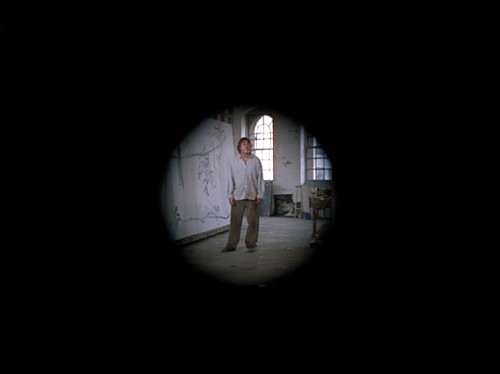
RD: You have a lot of fun with film grammar in the movie, too, with irises, for example, and there's this neat effect that you do during some of the dialogue, a slow dissolve, a series of dissolves. It's almost a sleepy quality. How do you decide when to use that and when not to?
AD: During the shooting, mainly. Even the dissolve, I guess. The dissolve is-- the main things are done-- the iris, everything is done during the takes.
RD: In the camera, while you're shooting?
AD: Yeah. I knew-- I don't remember the first time I used it, but I knew because I used it when I was in the cinema school. And I loved the first time that Scorsese worked with the French DP from Cuba, Néstor Almendros, you know it was on this short feature film in New York Stories [called Life Lessons], and I remember so clearly the first time I saw the film in a theater, you know, Scorsese working with this DP I loved so much. Both of them together, and it was the story of this painter played by Nick Nolte.
RD: Yeah, I remember that.
AD: And they used the iris because he was coming from France, and I knew because each time you are going to rent a camera, if you say, "By the way, could you just give me an iris? How much is it?" It's nothing, an iris is like that [holds thumb and index finger a few inches apart to show how big the box is]. No one uses it. Oh you can have it for free! It's nothing. You just put a bit of tape around the lens, voila, and everybody does their work, the traveling, the focus, the diaphe, and I can do like that [motions with his finger as if pulling a little lever around the lens] and it helps focus the attention, without adding any pathos. It's not like a zoom, but all of a sudden attention is focused without telling a spectator what they're supposed to feel.
So let's say it's a tribute to Scorsese [laughs]. When he was working with Almendros.
RD: [laughs] Right.